Listening to Your Heart Before It Speaks: How AI-Powered Stethoscopes Are Rewriting Preventive Cardiology
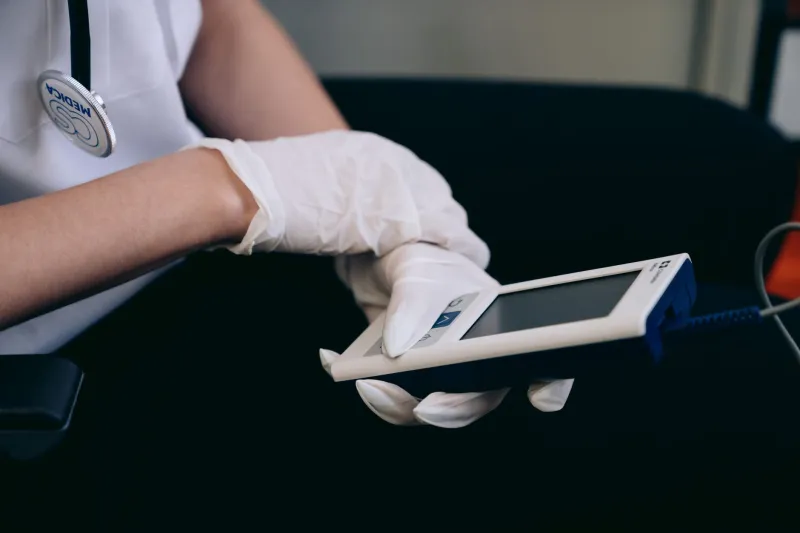
For more than two centuries, the stethoscope has been medicine's most iconic instrument—a simple tool that translates the body's internal rhythms into audible signals a trained clinician can interpret. Yet for all its elegance, the traditional stethoscope has a fundamental limitation: it is only as reliable as the human ear pressed against it. Now, artificial intelligence is changing that equation entirely, transforming a 19th-century instrument into a 21st-century diagnostic engine capable of detecting cardiac anomalies long before they announce themselves through fatigue, chest pain, or worse.
At StethyAI, we believe that smarter health insights begin with better listening—and nowhere is that philosophy more consequential than in the early detection of heart disease.
The Diagnostic Gap That Has Long Existed in Cardiology
Heart disease remains the leading cause of death in the United States, claiming roughly 700,000 lives each year according to the Centers for Disease Control and Prevention. A significant portion of those deaths are preceded by conditions—atrial fibrillation, mitral valve regurgitation, aortic stenosis—that are detectable if caught early enough, yet frequently go undiagnosed until they become acute emergencies.
The challenge has historically been one of access and precision. Echocardiograms, the gold standard for structural heart assessment, require specialized equipment and trained sonographers. Holter monitors demand that patients wear recording devices for 24 to 48 hours, hoping an arrhythmia happens to occur during that window. Standard auscultation—the act of a physician listening through a stethoscope—is highly dependent on individual skill and the acoustic subtlety of the condition in question. A soft, early-stage murmur can be extraordinarily difficult to distinguish from normal cardiac sounds, even for experienced clinicians.
This is the diagnostic gap that AI-powered acoustic devices are now beginning to close.
How Machine Learning Hears What Human Ears Miss
Modern AI stethoscopes do far more than amplify sound. They record, digitize, and analyze cardiac audio through algorithms trained on datasets that can encompass millions of annotated heart sound recordings—a volume of acoustic data no individual cardiologist could accumulate across an entire career.
Through a process called deep learning, these systems identify patterns in phonocardiographic signals that correlate with specific pathologies. The subtle "whoosh" of turbulent blood flow through a narrowing valve, the irregular cadence of an atrial fibrillation episode, the faint splitting of heart sounds that may indicate a conduction abnormality—these are the kinds of acoustic signatures that machine learning models are increasingly adept at flagging.
Several platforms have already demonstrated clinical-grade performance in controlled studies. Research published in peer-reviewed cardiology journals has shown AI acoustic analysis achieving sensitivity and specificity rates for murmur detection that rival, and in some cases exceed, those of general practitioners. This is particularly significant in primary care settings, where the first clinical encounter with a patient often determines whether a cardiac issue is recognized early or allowed to progress.
Atrial Fibrillation: A Case Study in Early Intervention
Atrial fibrillation, or AFib, provides perhaps the clearest illustration of why early acoustic detection matters. AFib affects an estimated 6 million Americans and is a leading cause of stroke—yet it is notoriously intermittent and therefore easy to miss. A patient may be in normal sinus rhythm during a routine office visit, only to experience episodes of irregular electrical activity hours later.
AI-powered wearable stethoscopes and remote cardiac monitoring tools are beginning to address this challenge by enabling continuous or near-continuous acoustic surveillance. Rather than capturing a single snapshot of cardiac function, these devices create a longitudinal record that can be analyzed algorithmically for the irregular rhythm patterns characteristic of AFib. When an anomaly is detected, the system can alert both the patient and their care team, triggering timely follow-up before a potentially catastrophic stroke occurs.
For patients over 65—a demographic in which AFib prevalence rises sharply—this kind of proactive monitoring represents a meaningful shift in how preventive cardiology can be practiced.
The Implications for Primary Care and Rural Access
One of the most compelling aspects of AI stethoscope technology is its potential to democratize cardiac screening. Traditional echocardiography requires a hospital or cardiology clinic; an AI-enhanced acoustic device can be deployed in a family medicine office, a rural health clinic, or even a patient's home. This portability is not a minor convenience—it is a structural transformation in where and how cardiovascular risk can be assessed.
For primary care physicians, these tools offer decision support that can help bridge the gap between general practice and subspecialty cardiology. A family doctor in rural Nebraska who captures an unusual heart sound can receive an AI-generated analysis within seconds, helping determine whether a referral to a cardiologist is warranted. This kind of augmented clinical judgment has the potential to reduce both underdiagnosis and unnecessary specialist visits.
Accuracy, Accountability, and the Role of Human Oversight
It is important to be precise about what AI stethoscopes are and are not. They are diagnostic support tools, not autonomous physicians. The most responsible implementations of this technology are designed to surface findings for human review, not to replace the clinical judgment of a licensed cardiologist.
False positives—instances where an AI flags a cardiac anomaly that turns out to be benign—carry their own costs in patient anxiety and unnecessary testing. Conversely, false negatives, while increasingly rare as models improve, underscore the importance of treating AI analysis as one input among several rather than a definitive verdict.
Regulatory frameworks are evolving alongside the technology. The U.S. Food and Drug Administration has cleared several AI-based cardiac analysis tools as Class II medical devices, a designation that requires demonstrated safety and effectiveness but falls short of the most rigorous approval pathway. As the evidence base matures, both clinicians and patients can expect more granular guidance on how to integrate these tools into standard care protocols.
What This Means for the Future of Heart Health in America
America is aging. By 2030, all baby boomers will be over 65, and the burden of cardiovascular disease is projected to grow substantially alongside that demographic shift. The healthcare system's capacity to conduct comprehensive cardiac screening for every at-risk individual using traditional methods alone is limited. AI-powered acoustic analysis offers a scalable, cost-effective complement to existing diagnostic pathways.
At StethyAI, we see this not as a replacement for the physician-patient relationship, but as an enhancement of it—a way to ensure that the conversation between doctor and patient is informed by richer, more precise data. When your heart has something to say, the goal is to make certain that nothing is lost in translation.
The stethoscope has always been a symbol of attentive care. With artificial intelligence woven into its design, it is becoming something more: a sentinel, listening continuously for the earliest warnings your heart may send.