The Quiet Crisis in Rural Medicine—And Why AI May Finally Be the Answer
Drive two hours outside of Nashville, or Albuquerque, or Boise, and the American healthcare system begins to look very different. The specialist offices disappear. The imaging centers thin out. The nearest emergency department may be forty miles away on a two-lane road that ices over in January. For the roughly 46 million Americans who live in rural communities, geography is not merely an inconvenience—it is a determinant of health outcomes in the most literal sense.
The statistics are stark. The National Rural Health Association estimates that rural Americans are 23 percent more likely to die from heart disease than their urban counterparts, 54 percent more likely to die from unintentional injuries, and substantially more likely to receive late-stage cancer diagnoses. These disparities are not primarily explained by lifestyle differences. They are explained by access—or the lack of it.
Now, a convergence of technologies that falls squarely within the mission of platforms like StethyAI is beginning to challenge the structural assumptions that have allowed this crisis to persist for decades.
The Anatomy of a Shortage
The United States currently faces a projected shortage of between 37,000 and 124,000 physicians by 2034, according to the Association of American Medical Colleges. Rural communities are bearing a disproportionate share of that deficit. As of 2023, more than 60 percent of federally designated Health Professional Shortage Areas are located in rural or partially rural geographies.
The reasons are layered and self-reinforcing. Medical school graduates carry an average debt burden exceeding $200,000, creating powerful financial incentives to practice in metropolitan markets where compensation is higher and career opportunities more varied. Rural hospitals, operating on thin margins, struggle to offer competitive salaries or the collegial professional environments that attract younger physicians. When a rural community loses its only internist or its only OB-GYN, recruiting a replacement can take years—if it happens at all.
Over 180 rural hospitals have closed since 2005, according to the Chartis Center for Rural Health, and hundreds more are operating under conditions of severe financial stress. Each closure ripples outward, removing not just inpatient beds but emergency services, imaging capabilities, and the specialist outreach programs that depended on the facility as an anchor.
This is the environment into which AI-powered diagnostic technology is now being introduced—and the fit, for all its complexity, is a compelling one.
What AI Can Do That a Closed Clinic Cannot
The promise of AI in rural healthcare is not that it will replace physicians—it will not, and it should not. The promise is that it can perform meaningful diagnostic triage, surface high-risk findings for urgent follow-up, and extend the reach of the limited clinical workforce that does exist in underserved communities.
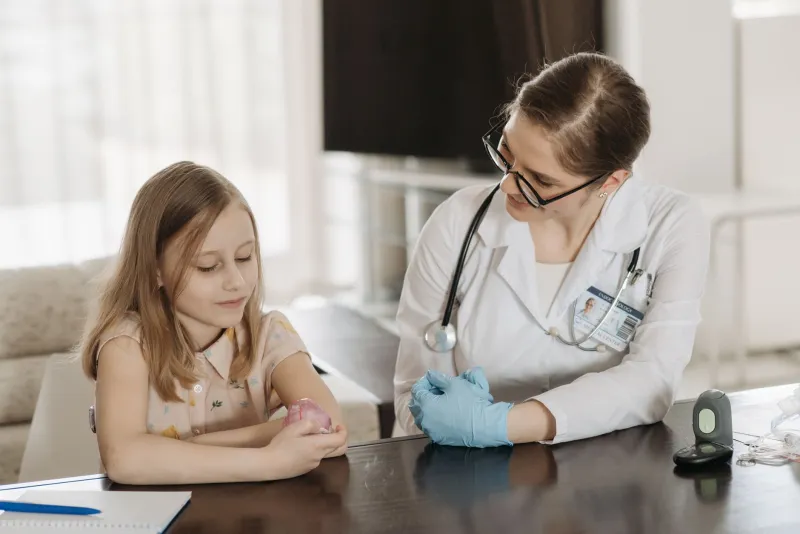
Consider the scenario of a patient in a rural county in eastern Kentucky—a region with some of the highest rates of cardiovascular disease and diabetes in the country. That patient may have a primary care provider, but the nearest cardiologist is a two-hour drive away, and a referral appointment may be six weeks out. If that patient develops an irregular heartbeat, the window between onset and diagnosis could stretch into months.
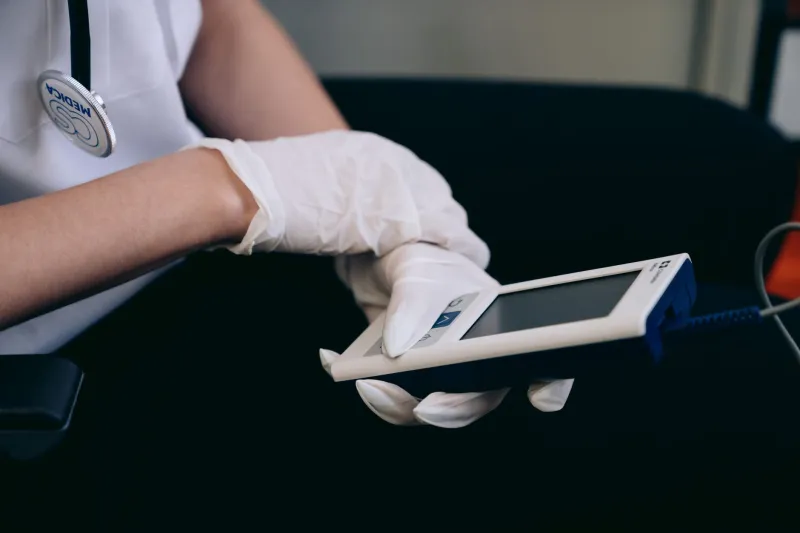
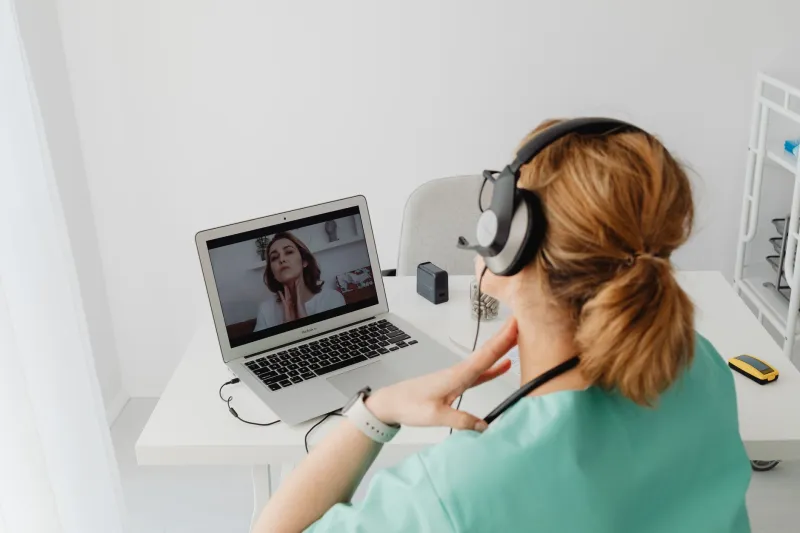
An AI-enabled remote cardiac monitoring device, accessible through that patient's primary care clinic or even deployed directly to the patient's home, could detect an arrhythmia within days of onset. The flagged data could be reviewed remotely by a cardiologist via telehealth consultation, and a treatment plan could be initiated without requiring the patient to make a trip that, for many rural residents, means lost wages, childcare challenges, and a full day of travel.
This is not a hypothetical. Programs piloted across Appalachia, the Mississippi Delta, and the rural Mountain West have demonstrated that AI-assisted triage and remote monitoring can meaningfully accelerate diagnosis timelines and improve care coordination for patients who would otherwise fall through the cracks.
The Infrastructure Problem That Technology Alone Cannot Solve
It would be intellectually dishonest to describe AI as a straightforward solution to rural healthcare inequity without confronting the infrastructure barriers that complicate its deployment.
Broadband connectivity remains profoundly uneven across rural America. The Federal Communications Commission estimates that approximately 21 million Americans lack access to fixed broadband at speeds adequate for telehealth applications—and independent researchers suggest the actual figure may be considerably higher. A remote monitoring platform is only as useful as the connection it runs on. In communities where cellular coverage is spotty and fiber optic infrastructure nonexistent, even the most sophisticated AI diagnostic tool is effectively inert.
Digital literacy presents a related challenge. Older rural residents—precisely the demographic most burdened by chronic disease—may be least comfortable navigating app-based health platforms, connected devices, or telehealth video interfaces. Meaningful deployment of AI health tools in these communities requires not just the technology itself, but the training, technical support, and culturally competent outreach to make that technology usable.
Finally, reimbursement structures have historically lagged behind the clinical reality of telehealth and remote monitoring. The COVID-19 pandemic prompted a significant, if temporary, expansion of Medicare and Medicaid telehealth coverage. Whether those expansions will be made permanent—and whether they will extend to the AI-powered diagnostic tools now entering the market—remains an active and consequential policy debate in Washington.
Policy Levers That Could Accelerate Equitable AI Deployment
Addressing rural healthcare inequity through AI is ultimately as much a policy challenge as a technological one. Several levers are available to federal and state governments that could meaningfully accelerate progress.
Expanding the Rural Health Clinics program to include reimbursement for AI-assisted diagnostic services would create financial incentives for rural providers to adopt these tools. Increased funding for the USDA's ReConnect Program and the FCC's E-Rate and Rural Health Care programs could address the broadband gap that limits technology deployment. Federal loan forgiveness programs for clinicians who practice in shortage areas—combined with support for community health workers trained to operate AI diagnostic equipment—could help bridge the human capacity gap that technology alone cannot close.
At the state level, scope-of-practice reforms that allow nurse practitioners and physician assistants to operate more autonomously—supported by AI clinical decision tools—could extend diagnostic capacity in communities where physician recruitment has stalled.
A Different Vision of What Healthcare Access Can Look Like
The rural healthcare crisis did not develop overnight, and it will not be resolved by any single intervention. But the emergence of AI-powered diagnostic platforms represents something genuinely new in this decades-long conversation: a technology that is increasingly affordable, increasingly accurate, and increasingly portable—capable of going where physicians cannot or will not go.
At StethyAI, we believe that smarter health insights should not be a privilege of geography. The patient in rural West Virginia deserves the same quality of early detection, the same depth of diagnostic analysis, and the same speed of clinical response as the patient in downtown Chicago. Closing that gap is a moral imperative—and AI, deployed thoughtfully and equitably, is one of the most powerful tools we have ever had to pursue it.
The technology is ready. The need is urgent. What remains is the collective will to build the policy, infrastructure, and institutional frameworks that allow this moment to become a turning point rather than a missed opportunity.