When the Algorithm Should Step Aside: 5 Situations That Demand a Human Doctor

Artificial intelligence has earned a legitimate place in modern healthcare. From screening mammograms to cardiac rhythm analysis, AI-assisted diagnostics are improving accuracy, expanding access, and helping clinicians catch conditions earlier than traditional methods allow. At StethyAI, we are proud to be part of that progress.
But honest advocacy for AI in medicine requires something equally important: clarity about its limits.
No diagnostic algorithm—however sophisticated—can replicate the full scope of what happens when a skilled physician examines a patient in person. The nuance of a physical exam, the weight of clinical experience, the ethical responsibility of a licensed professional—these are not features that can be coded. Understanding where AI adds value and where it falls short is not a criticism of the technology. It is, in fact, the foundation of using it wisely.
Below are five specific situations in which AI diagnostic tools should be treated as a starting point, not a final answer—and in which seeking care from a human clinician is not optional.
1. Chest Pain With Any Accompanying Symptoms
Chest discomfort is one of the most symptom-reported concerns entered into AI health platforms, and it is also one of the most diagnostically complex. The differential diagnosis for chest pain spans dozens of conditions—ranging from musculoskeletal strain and acid reflux to pulmonary embolism, aortic dissection, and acute myocardial infarction—and distinguishing among them requires far more than a symptom checklist.
AI tools can help patients organize their symptoms and understand general risk factors. What they cannot do is palpate the chest wall, auscultate breath sounds, assess skin color and diaphoresis, or interpret a real-time 12-lead electrocardiogram in context. They cannot feel the urgency that an experienced emergency physician feels when a patient walks through the door clutching their chest.
If you are experiencing chest pain accompanied by shortness of breath, sweating, jaw or arm discomfort, nausea, or a sense of impending doom, call 911 immediately. Do not type your symptoms into an app first. Time is muscle, as cardiologists say—and no algorithm can substitute for emergency intervention when minutes matter.
2. Mental Health Crises and Suicidal Ideation
AI-powered mental health tools—chatbots, mood trackers, symptom assessors—have demonstrated real utility in supporting individuals with mild to moderate anxiety and depression. They offer accessibility at hours when human support may not be available, and they carry none of the stigma that some patients associate with seeking mental health care.
However, when a person is experiencing a mental health crisis—acute suicidal ideation, psychosis, severe self-harm urges, or a psychiatric emergency—an algorithm is categorically insufficient. Crisis intervention requires human connection, real-time risk assessment, and the authority to coordinate emergency resources. It requires empathy in a form that cannot be simulated.
If you or someone you know is in crisis, contact the 988 Suicide and Crisis Lifeline by calling or texting 988. A trained human counselor is available around the clock. AI tools may complement ongoing mental health care, but they must never be positioned as a substitute for human intervention when a life may be at risk.
3. Pediatric Illness in Children Under Two
Infants and toddlers are not simply small adults. Their physiological parameters—normal heart rates, respiratory rates, temperature ranges, and neurological baselines—differ substantially from those of older children and adults. More critically, very young children cannot accurately report their own symptoms. A parent's description, however detailed, is filtered through observation rather than direct experience.
AI diagnostic tools trained primarily on adult or mixed-age datasets may produce unreliable outputs when applied to infants. A fever of 100.4°F in a two-month-old is a medical emergency requiring immediate evaluation; the same temperature in a healthy five-year-old may warrant watchful waiting. These distinctions require clinical experience and physical examination—the fontanelle assessment, the quality of the child's cry, the capillary refill time—that no symptom-checker can replicate.
For children under two, particularly infants under three months, any illness with fever, difficulty breathing, unusual lethargy, or feeding refusal warrants prompt in-person evaluation by a pediatrician or emergency clinician.
4. Symptoms That Have Persisted or Progressed Over Weeks
AI diagnostic tools perform best at pattern recognition within well-defined symptom clusters. They are less well-equipped to reason about the clinical significance of symptom evolution over time—the headache that began two weeks ago as mild and intermittent and has become daily and severe, the fatigue that started after a viral illness and has never fully resolved, the unexplained weight loss that has continued across three months.
Persistent or progressive symptoms often signal underlying conditions—autoimmune disorders, occult malignancies, chronic infections, endocrine dysfunction—that require laboratory workup, imaging, and specialist interpretation. The narrative arc of how symptoms have changed is a critical diagnostic data point, and assembling that arc into a coherent clinical picture is a distinctly human skill.
If your symptoms have lasted more than two to three weeks without a clear explanation, or if they are worsening rather than resolving, schedule an appointment with your primary care physician. Bring a written timeline of your symptoms to that visit—it will help your doctor considerably.
5. Any Situation Requiring Procedural Diagnosis or Physical Examination
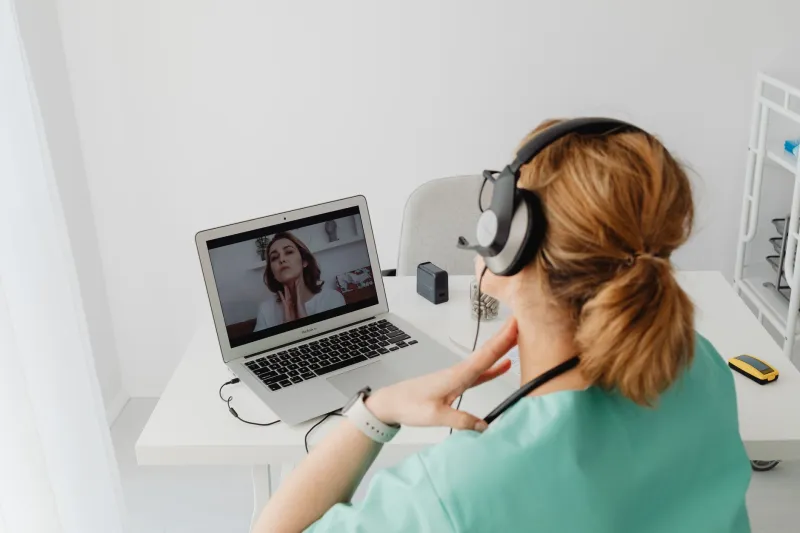
There is an entire category of diagnostic information that simply does not exist in the digital realm: the texture of a lymph node, the presence of rebound tenderness suggesting peritoneal irritation, the sound of crackles in the lung bases, the appearance of a skin lesion under dermoscopic light. These findings emerge from direct physical contact between a clinician and a patient, and they cannot be captured through a symptom survey or even a high-definition video call.
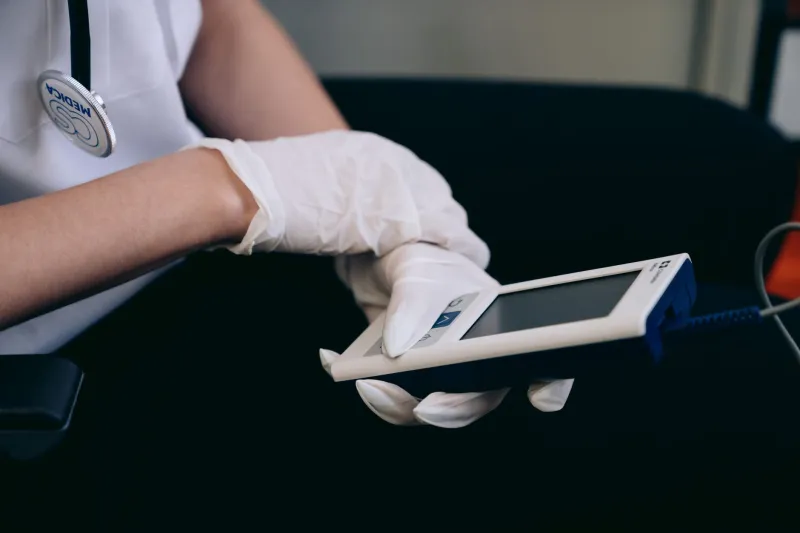
AI platforms that incorporate remote monitoring devices—connected stethoscopes, pulse oximeters, blood pressure cuffs—are extending the reach of the physical exam in meaningful ways. But they are extending it, not replacing it. There will always be clinical scenarios in which a physician's hands, eyes, and ears, applied directly to a patient, provide information that no remote tool can generate.
This is not a limitation of current technology awaiting a future fix. It is a structural feature of human medicine that reflects the irreducible complexity of the human body.
Using AI Wisely: The StethyAI Perspective
The goal of AI-powered health tools is to make patients more informed, more engaged, and better prepared for the conversations they have with their clinical care teams. At StethyAI, we design our resources to support that goal—and to be transparent about where that goal ends.
AI is a powerful first step. In the situations described above, it must not be the last one. Knowing the difference is not a sign of distrust in technology. It is a sign of health literacy—and that, ultimately, is what we are here to build.